
3D Simulation for Industrial Robots: A Complete Guide
Every robotic welding cell, every cobot pick-and-place line, every automated fabrication station has a moment of truth: the day it gets switched on for real. Historically, that day was full of surprises — a collision nobody predicted, a cycle time that missed target by 20%, a cable routed straight through a robot’s working envelope. 3D simulation exists to move that day of surprises off the shop floor and onto a screen, weeks or months earlier, when fixing a mistake costs a mouse click instead of a production stoppage.
What 3D Simulation Actually Means in Robotics
At its core, 3D simulation software creates a digital replica of a robot cell — the robot arm, its tooling, the fixtures, the conveyor, the safety fencing, even the human operators who’ll work alongside it. Every joint, every reach limit, every cycle time is modeled to match the real machine’s specifications. Engineers can then program, test, and refine the entire automation process virtually before a single robot is bolted to the floor.
This isn’t the same as a simple 3D drawing or CAD layout. A true robotics simulation is dynamic: the robot moves, the weld torch fires, the part indexes, the cycle timer runs — all inside physics-accurate software that flags problems a static drawing never could.
Why It Matters More Than Ever
1. Collision detection before metal meets metal
The single most common reason robotic cell commissioning runs late is unplanned physical interference — a robot arm clipping a fixture, a gripper hitting a part at the wrong angle. Simulation catches these in software, where the fix is editing a path, not repairing a bent tool or a damaged part.
2. Cycle time validation
Buyers of automation almost always ask one question first: “how many parts per hour?” Simulation lets an integrator answer that question with real data — not an estimate — before the customer has committed capital. This matters enormously for ROI conversations, especially with cost-conscious buyers who need to justify the spend against manual labour.
3. Virtual commissioning cuts downtime
For a customer running an existing production line, every hour a robot cell is being tuned is an hour of lost output. Virtual commissioning — testing and debugging the robot’s program against a simulated version of the entire line, including PLCs and sensors — means the physical installation phase shrinks to final calibration rather than first-time programming.
4. Safer path planning around people
Wherever robots and human workers share a workspace (increasingly common with cobots), simulation lets engineers map out safe zones, verify reach envelopes, and test emergency-stop scenarios without ever putting a person at risk during the testing phase itself.
5. Reusability across projects
A simulation built for one welding cell rarely starts from zero for the next. Robot models, common fixtures, and standard motion libraries can be reused and adapted, which compounds engineering speed on every project after the first.
Where It Fits in a Real Automation Project
Stage | What Simulation Does |
Feasibility / sales | Shows a prospective customer exactly how their part will be welded, handled, or assembled — before a contract is signed |
Design | Validates reach, cycle time, and layout so the physical cell is engineered right the first time |
Programming | Robot paths are written and tested offline, drastically cutting on-site programming time |
Commissioning | Virtual testing against control logic (PLC, safety systems) catches integration bugs early |
Post-install | The same digital model becomes a training tool and a baseline for future line changes |
Why Simulation Matters for Welding & Fabrication
Welding automation is a particularly strong use case for simulation, for a simple reason: weld quality is unforgiving. A torch angle off by a few degrees, or a path that doesn’t account for thermal distortion in a long weld seam, shows up as a defect — not a warning message. Simulating the weld path against the actual part geometry, checking torch reach and joint access before the robot ever strikes an arc, is the difference between a cell that runs at rated speed on day one and one that needs weeks of manual re-tuning.
For fabricators and OEMs weighing whether to automate a line, a simulated demonstration also solves a trust problem: it’s far easier to commit budget to a robot cell you’ve watched complete your actual part in software than to a sales deck promising it’ll work.
How Simulation Reduces Automation Risk
Automation projects fail for predictable reasons — mismatched expectations on cycle time, unplanned collisions, integration surprises with existing equipment, and commissioning that runs long and over budget. Simulation doesn’t eliminate every risk, but it moves the discovery of most of these problems from the most expensive place to find them (a live production floor) to the cheapest (a laptop). For manufacturers weighing whether robotics deployment is worth the capital outlay, that shift in where problems get caught is often what tips the decision.
As automation becomes more central to manufacturing — driven by rising labour costs, skill shortages on the shop floor, and pressure to hit tighter tolerances — the projects that succeed will increasingly be the ones that were proven out digitally long before they were built physically.
How RL Robotics Helps
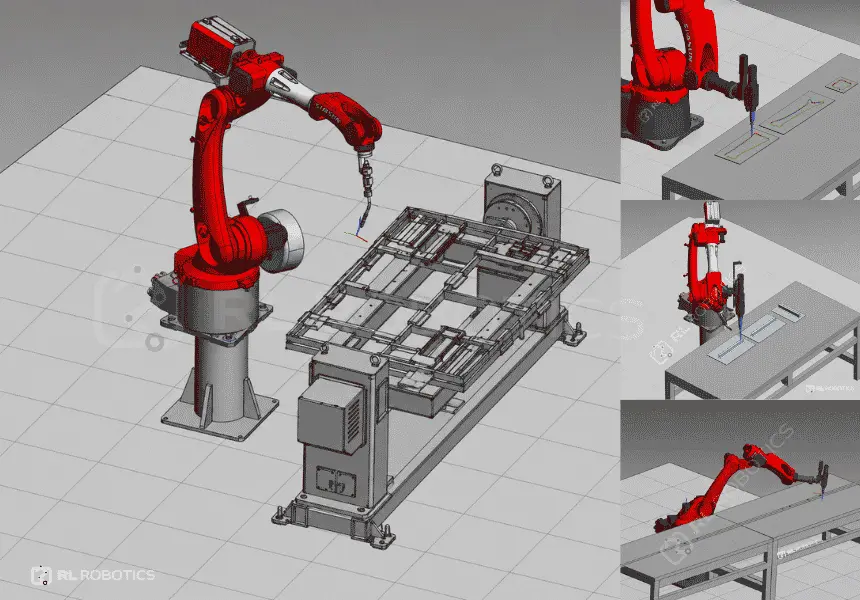
RL Robotics builds simulation into automation projects from the very first conversation, not as an afterthought once a cell is already being fabricated. For automotive and metal-fabrication customers — from MSMEs to large manufacturers — this means:
Simulated proof before commitment. Before a customer signs off, RL Robotics can model the actual part, weld path, or handling sequence in 3D, so the buyer sees real cycle times and reach feasibility rather than a sales estimate.
Collision-free, right-first-time cell design. Fixtures, tooling, and robot placement are validated virtually, cutting the on-site surprises that typically stretch out commissioning timelines and budgets.
Offline-programmed, not floor-programmed. Robot paths validated in simulation are carried straight through to offline programming, so production-ready code is loaded onto the controller with minimal teach-pendant time on the live line.
Faster commissioning, less production downtime. Because robot programs and weld paths are largely proven out offline, installation on a live shop floor is focused on final calibration — critical for customers who can’t afford extended line stoppages.
Applied expertise in welding and cobot deployments. RL Robotics’ simulation and OLP work is grounded in its core domain — welding automation, cobots, and industrial arms for automotive and heavy engineering — so the models account for real-world factors like thermal distortion and joint access, not just generic robot motion.
A foundation for the Labour + Robot as a Service pilot. As RL Robotics tests bundling trained operators with robot cells, simulation and offline programming together give customers (and RL Robotics itself) a clear, de-risked picture of exactly how a welding or production-line role will be automated — supporting the “solve your labour shortage” pitch with hard evidence rather than promises alone.
The shift toward simulation-first automation isn’t a trend to watch from the sidelines — it’s quickly becoming the baseline expectation for any serious robotics deployment. Manufacturers who insist on seeing their process proven in software before it’s built in steel aren’t being cautious; they’re being smart about where risk gets caught and where budget gets spent. For RL Robotics, that same discipline — simulation into offline programming into a right-first-time install — is what turns a robot cell from a piece of equipment into a dependable partner on the shop floor, and it’s the same rigor the company is now extending as it explores what a bundled Labour + Robot as a Service model could look like for its customers.
Ready to Automate Your Business?
Whether you want to implement vision-guided welding, automate material handling, or improve inspection accuracy—RL Robotics has the right solution for you.
👉 Visit rlrobotics.in to book a live demo and explore how 3D Simulation for robotics can transform your production line.
Related Blogs
FAq
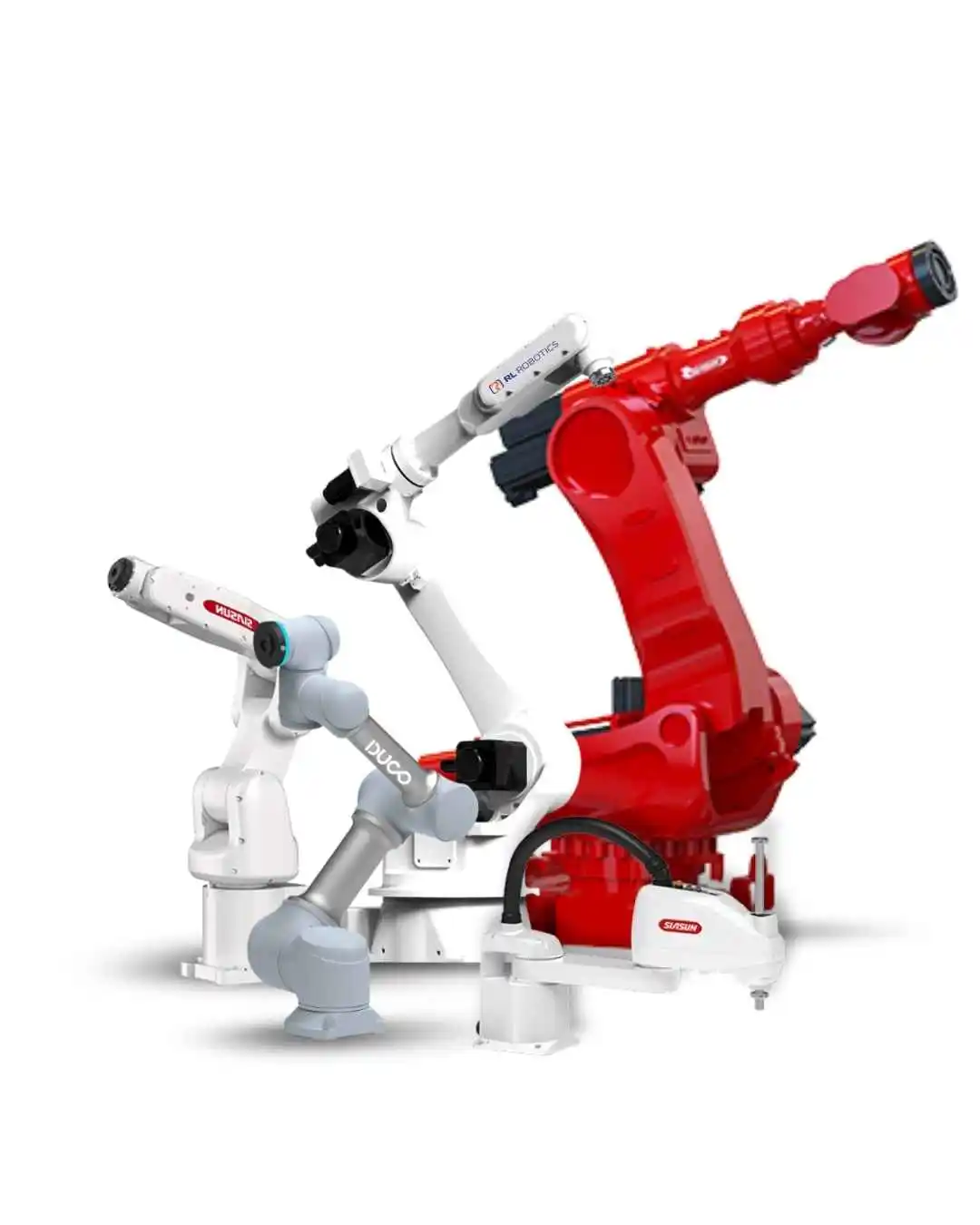
What is 3D simulation for industrial robots?
3D simulation for industrial robots is a virtual method used to model and evaluate robot movements, workspace, cell layout and automation processes before installing the physical robotic system.
Why is 3D simulation important for industrial robot automation?
Yes — it’s engineered as a production-critical asset for press lines, structural fabrication, and continuous multi-shift environments, not just occasional heavy lifting. The robot is built to run as a core part of your production line, not a supplementary tool brought in for specific tasks.
What can be tested using industrial robot simulation?
Industrial robot simulation can be used to evaluate robot movements, reach, workspace, cycle sequences, cell layouts and potential collision risks before physical installation.
Can 3D simulation be used for robotic welding?
Yes. 3D simulation can be used during robotic welding planning to evaluate robot movement, torch access, workpiece positioning and the overall welding cell layout before implementation.
How does robot simulation help manufacturers?
Robot simulation helps manufacturers visualise the proposed automation system, evaluate different layouts and identify potential problems before investing in physical installation and commissioning.